Search...



We are excited to share an in-depth teardown and analysis of Tesla's 4th generation drive unit (DU). This latest DU is believed to originate from Tesla's Texas Gigafactory and is currently used in the rear drive of the Model Y, while also being compatible with the rear position of the Model 3.
This new generation is an evolution of the 2017 Model 3 rear-drive PM SRM drive unit, retaining the strengths of its predecessor while introducing numerous optimizations in design, manufacturing, and performance.
The overall layout of the 4th generation drive unit remains consistent with previous versions but has been fully optimized in detail. Its main components include:
* Inverter
* Cooling system
* Oil pump and heat exchanger
* Gearbox
* Electric motor (stator and rotor)
The positions of these components follow Tesla's traditional design philosophy, but structural connections and materials have been innovatively improved.
Key Advantages: Compact layout, optimized connections, and lightweight design.
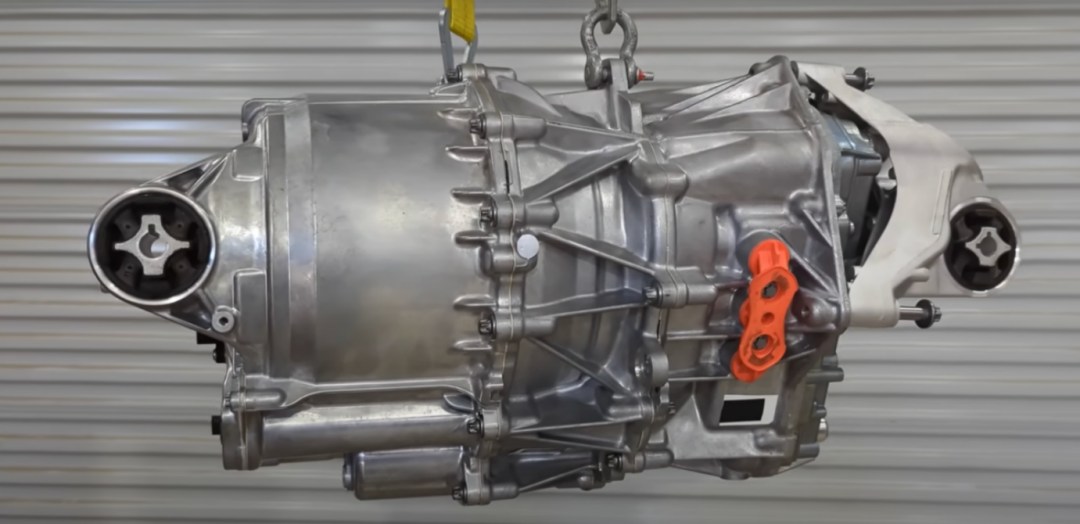
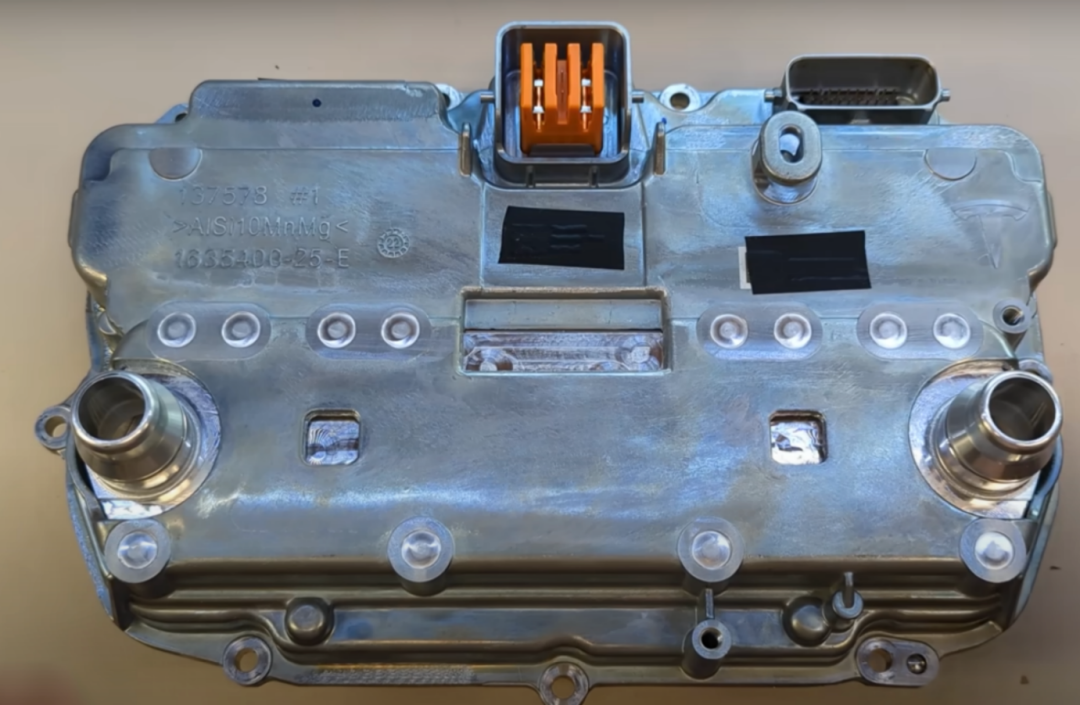
* Redesigned as a compact rectangular shape with integrated casting.
* High-voltage and data connectors are molded in place.
* Integrated new cooling module connected via friction stir welding, optimizing material usage and fasteners.
* Rear vent assembly retained, but positioned higher to form a shield against water ingress.
* Fewer ribs on the casting, contributing to a lighter structure.
* Rotor design similar to previous generation; stator uses a new hairpin design:
* Higher winding fill ratio
* Automated manufacturing process, eliminating hand-wound copper wires
* Significant reduction in production cost
* Internal components include:
* Stacked plate heat exchanger for gear oil cooling
* Permanent cylindrical oil filter, integrated into the housing and maintenance-free, designed to trap micro debris throughout vehicle lifetime
Innovations: Hairpin stator, optimized thermal management, maintenance-free oil filter.
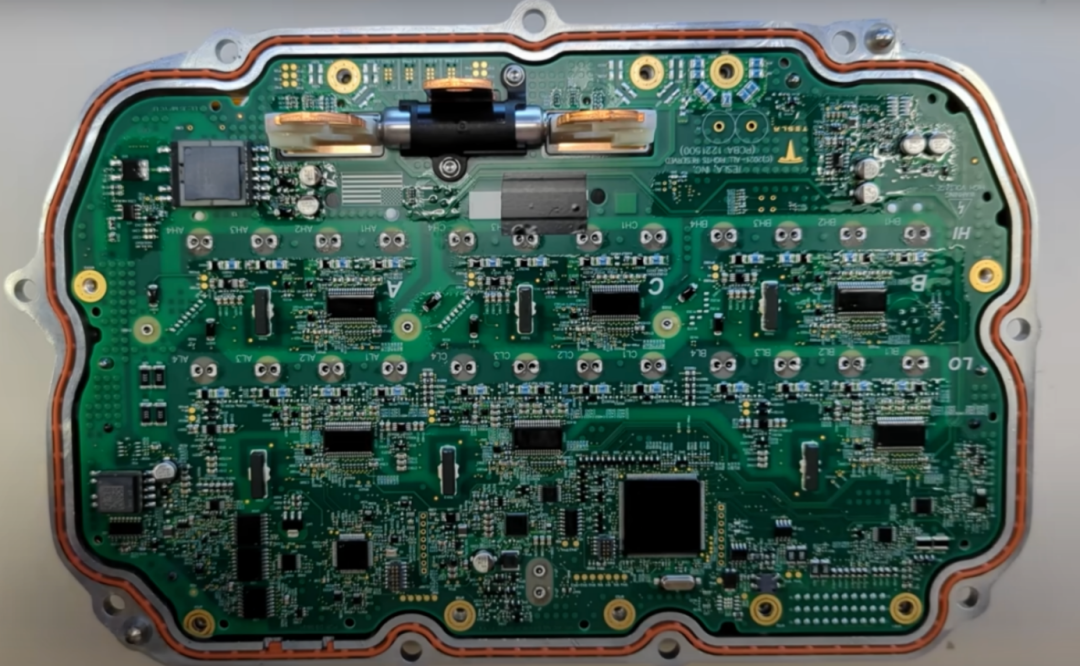
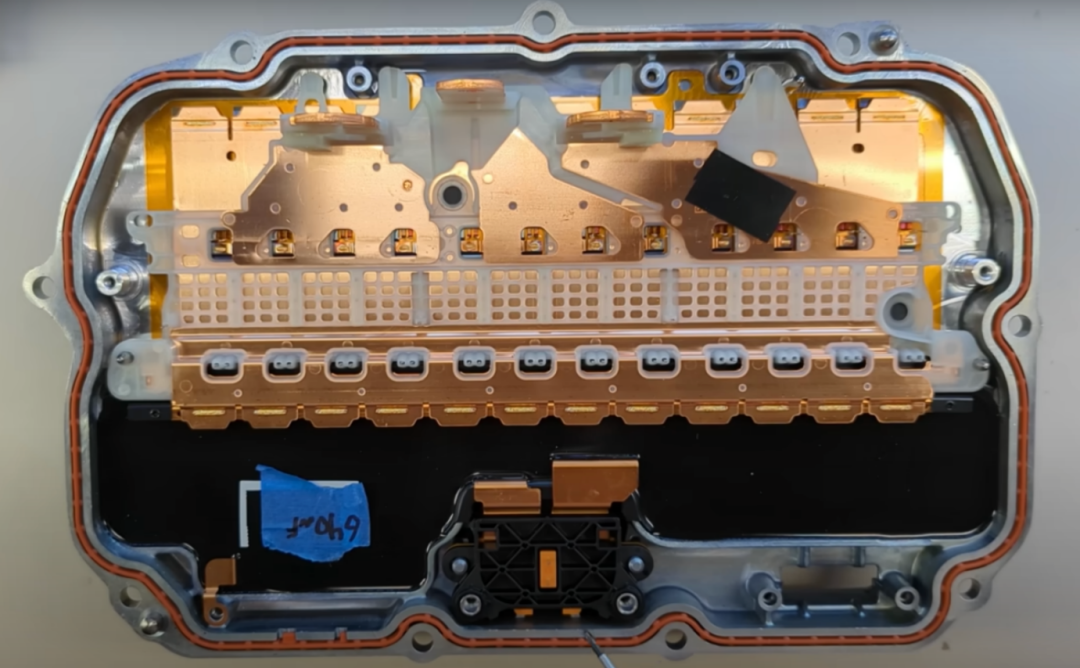
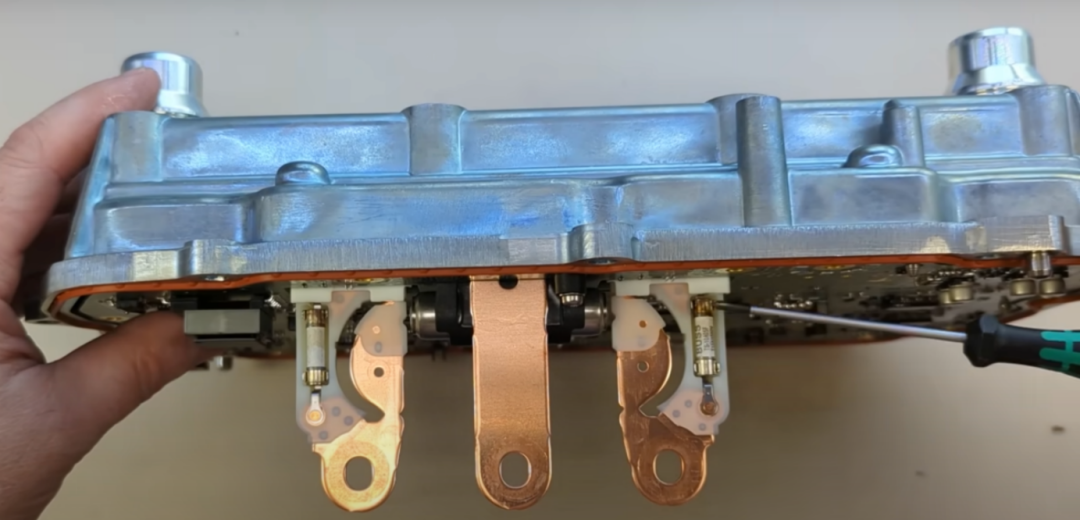
* PCB design is more compact, with advanced safety mechanisms:
* Pyroelectric disconnect for rapid two-phase motor cutoff during faults
* 10,000A interrupt fuse works in tandem to safely cut current and extinguish arcs
* Core control chip: TI TMS320 dual-core DSP
* Added custom safety controller
* Current sensors measure two phases, with the third phase calculated by difference
* Temperature monitoring upgraded to non-contact infrared sensors, replacing traditional thermistors
* Discharge resistors removed, likely handled via motor windings or MOSFETs
* Power section uses planar PCB transformers, providing isolated power for each gate driver at low cost
| Function | Model / Vendor |
|---|---|
| Main DSP | TI TMS320F28377DPTPQ |
| Safety Controller | Tesla proprietary 16324 1TC TC14427 2212 |
| Gate Drivers | ST STGAP4S |
| IR Temperature Sensors | ACC T5977510 |
| Digital Isolators | TI ISO7741FQ / ISO7762FQ |
| Analog Isolator | TI AMC3330-Q1 |
| Pyro Bypass Fuse | Buss TS-10A05F T10AH500V |
Tesla's 4th generation drive unit represents a significant evolution over its predecessor:
* More compact design
* Lower manufacturing costs
* Improved performance and reliability
* Innovative technologies: Hairpin stator, optimized cooling connections, and advanced temperature sensing
These innovations showcase Tesla's ongoing exploration and advancement in electric drive technology, reflecting a mature and efficient approach to EV powertrain design.
At AXTEK Electronic Co., Limited, we offer:
* Large stocks of TI DSPs and related components
* Long-term procurement channels for consistent supply
* Expert technical support for EV and power electronics projects
Contact us today to secure inventory or discuss long-term orders for your EV solutions.
 More information?
AXTEK Series NYQUEST CMSEMICON ST MICROELECTRONICS Featured Manufacturers Puya MCUs ICMAN Touch Chips ZXInfoTek Holtek MCUs MORNSUN Modules
Company Profile Certificates Terms & Conditions Privacy Statement


 MCU Solutions
 PCBA Solutions
 Bluetooth Solutions
 FAQ
FAQ Contact Us
 Company News
 Technology News
 Industry News
 PCBA News
 Company Profile
 Certificates
 Terms & Conditions
 Privacy Statement
 Home Appliances
 Beauty Appliances
 Lighting
 Kid's Toys
 Security Alarm
 Health Care